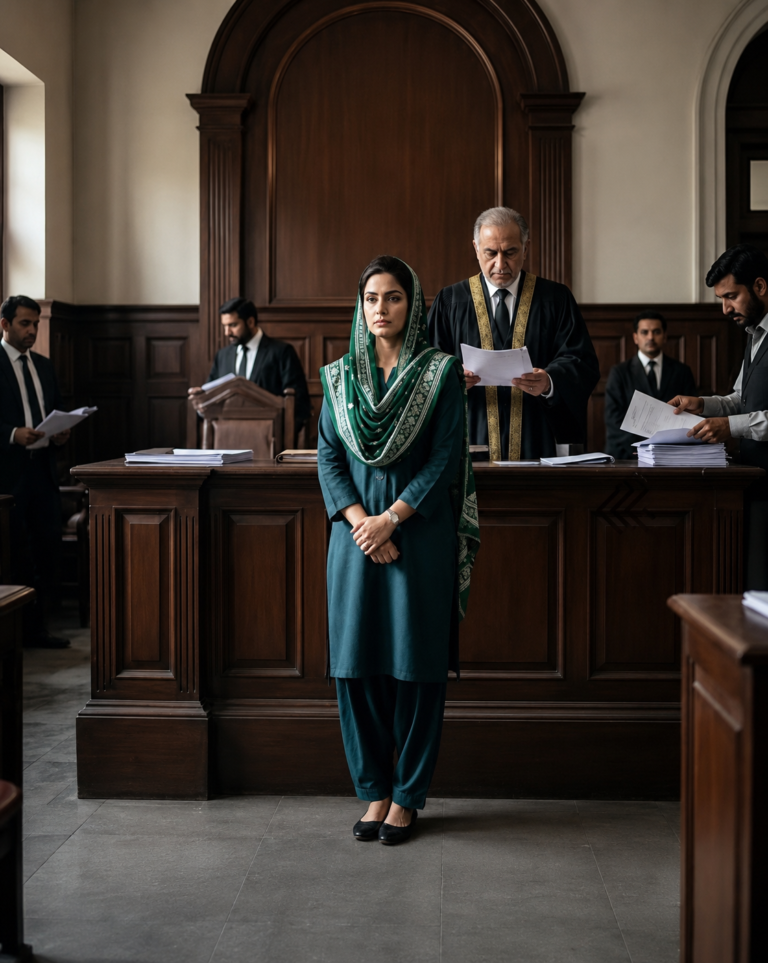

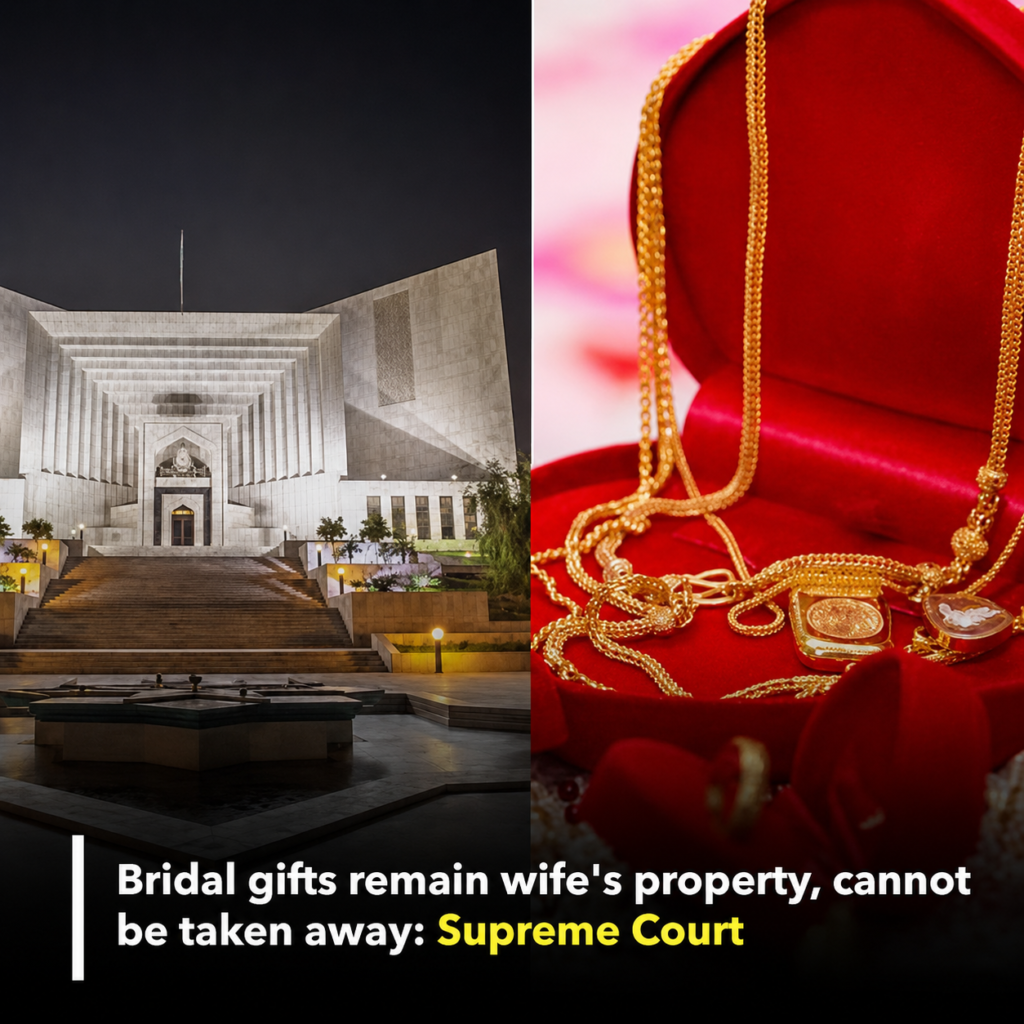
The Supreme Court of Pakistan has made an important decision to protect the property rights of married women.
The Court ruled that all bridal gold, jewelry, and wedding gifts given to a bride belong only to her. These items are her personal property.
The Court also made it clear that a husband, mother-in-law, father-in-law, or any other family member cannot keep, use, or claim ownership of the bride’s jewelry or gifts without her permission.
This decision helps protect women and makes the law easier to understand during marriage or family disputes.
What Did the Supreme Court Say?
According to the Supreme Court, any gold, jewelry, or gifts given to the bride at the time of marriage belong only to the bride.
It does not matter who gave the gifts.
They may come from:
- The bride’s parents
- The bride’s relatives
- The groom
- The groom’s parents
- Friends or wedding guests
Once these gifts are given to the bride, they become her legal property.
Can the Husband Claim the Bride’s Jewelry?
No.
The Supreme Court clearly said that a husband has no legal right to claim the bride’s jewelry or wedding gifts.
Even if the jewelry was bought by the husband or his family, it belongs to the bride if it was given as a gift to her.
The same rule applies to in-laws. They cannot keep or refuse to return the bride’s jewelry if it belongs to her.
What Can a Wife Do If Her Jewelry Is Not Returned?
If a husband or in-laws refuse to return the bride’s jewelry or wedding gifts, the wife has the right to take legal action.
She can file a recovery case in the Family Court.
If the Court finds that the jewelry belongs to the wife, it can order the husband or in-laws to return her property.
How Does the Court Decide Who Owns the Gifts?
The Supreme Court said that the most important thing is why the gift was given.
If the gift was meant for the bride, then it belongs to her.
The Court looks at the purpose of the gift, not only the receipt or the name written on the purchase documents.
What Did the Court Say About Dowry (Jahez)?
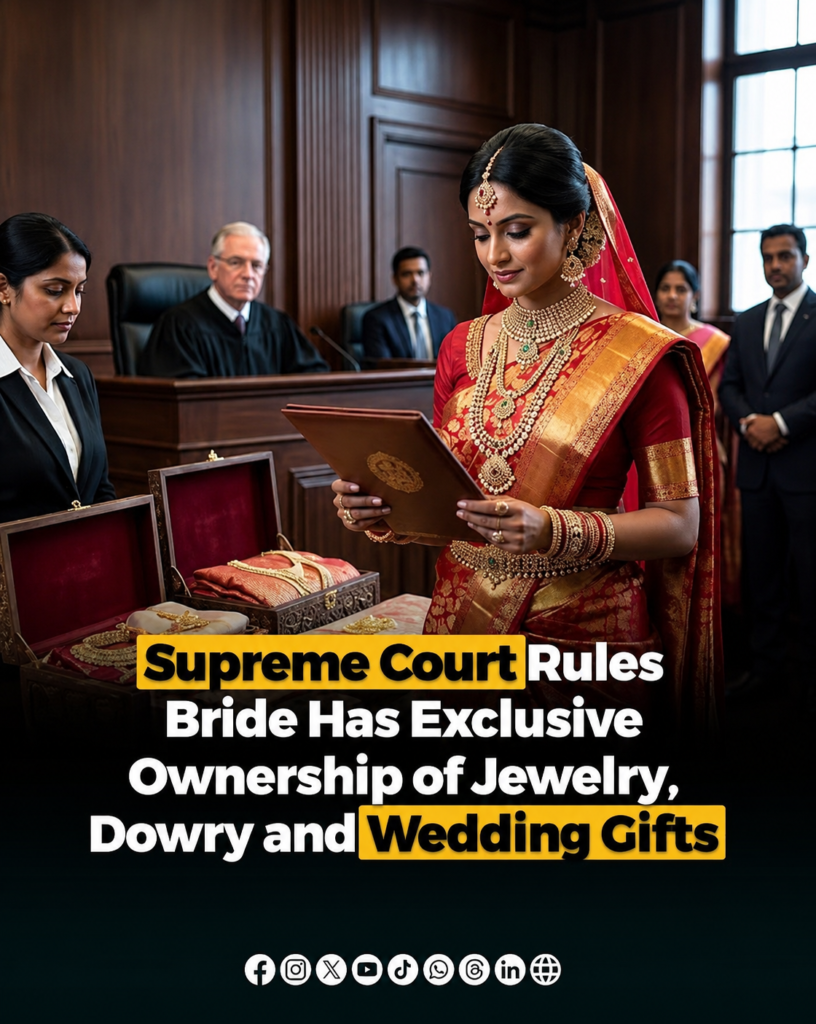
The Supreme Court also explained that this decision does not support or encourage the dowry (Jahez) system.
The purpose of the judgment is only to protect a woman’s legal ownership of gifts that were given to her.
The Court also said that heavy dowry demands can create financial problems for families and should not be encouraged.
Why Is This Decision Important?
This judgment gives better legal protection to women in Pakistan.
It confirms that:
- The bride is the legal owner of her bridal gold.
- Wedding gifts belong to the bride.
- No one can take these items without her permission.
- A wife can ask the Family Court to help recover her property.
- Women’s financial rights are protected by law.
Important Things Every Couple Should Know
Here are the main points from the Supreme Court’s decision:
- Bridal gold belongs only to the bride.
- Wedding jewelry is the bride’s personal property.
- Gifts from both families belong to the bride if they were given to her.
- Husbands and in-laws cannot legally keep or use the bride’s jewelry without her permission.
- A wife can file a case in the Family Court to recover her property.
- This judgment protects women’s rights but does not support the dowry culture.
Frequently Asked Questions (FAQs)
Does the husband own the bride’s gold?
No. The Supreme Court has confirmed that bridal gold belongs only to the bride.
Can in-laws keep the bride’s jewelry?
No. They cannot keep the jewelry unless the bride gives them permission.
Can a wife get her jewelry back after separation or divorce?
Yes. She can file a recovery case in the Family Court to get back her personal property.
Does this decision support the dowry system?
No. The Supreme Court clearly said that protecting a woman’s property rights is different from supporting the dowry system.
Final Words
This Supreme Court decision is an important step for protecting the rights of married women in Pakistan.
Marriage should be based on love, trust, respect, and fairness. A bride’s gold, jewelry, and wedding gifts are her personal property and should always remain with her.
Knowing your legal rights can help avoid family disputes and protect your property in the future.
Learn More About Marriage Laws in Pakistan
Want to know more about Nikah registration, Court Marriage, Haq Mehr, family laws, and women’s legal rights in Pakistan?
Visit Nikah-Vow.com for simple, reliable, and easy-to-understand guides that help couples understand their legal rights and responsibilities before and after marriage.